Zuiryū-ji Temple: The Zen Masterpiece Hidden in Takaoka
Date
1645–1663
Divinity
Shakyamuni Buddha
Religion
Sōtō Zen Buddhism
Location
Takaoka, Toyama Prefecture
A Lord's Legacy Carved in Stone and Cypress
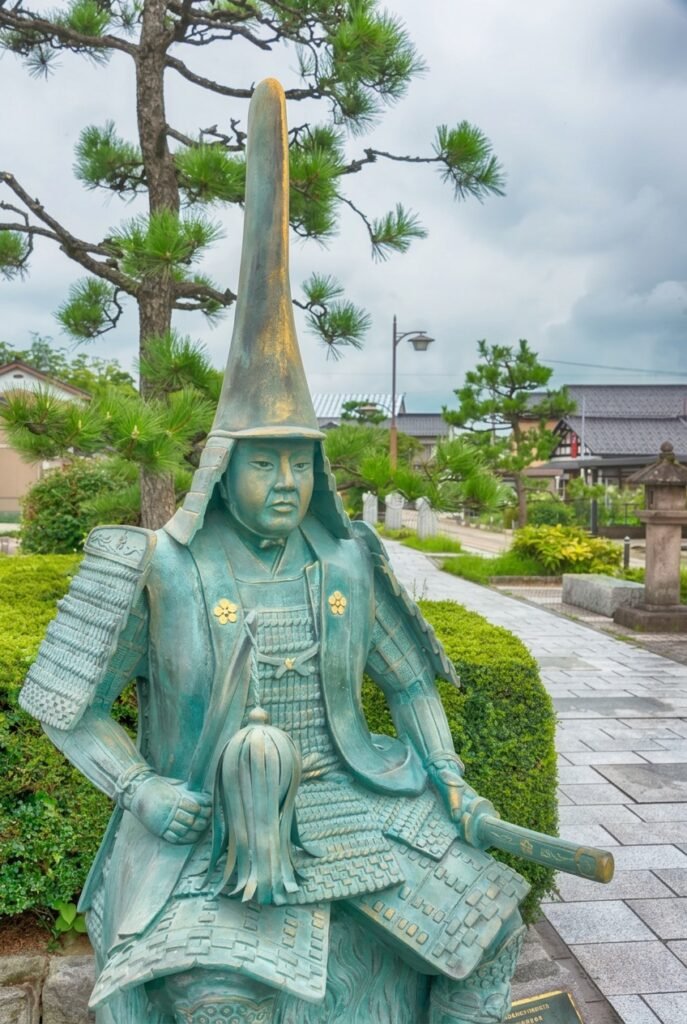
Zuiryū-ji was built by Maeda Toshitsune, the third lord of the powerful Kaga domain, to honor his predecessor Maeda Toshinaga, one of the most influential warlords of the early Edo period, who ruled the largest domain in Japan outside the Tokugawa shogunate. Construction began in 1644 and was completed over a painstaking twenty-year period, finally finished in 1663, the fiftieth anniversary of Toshinaga’s death.
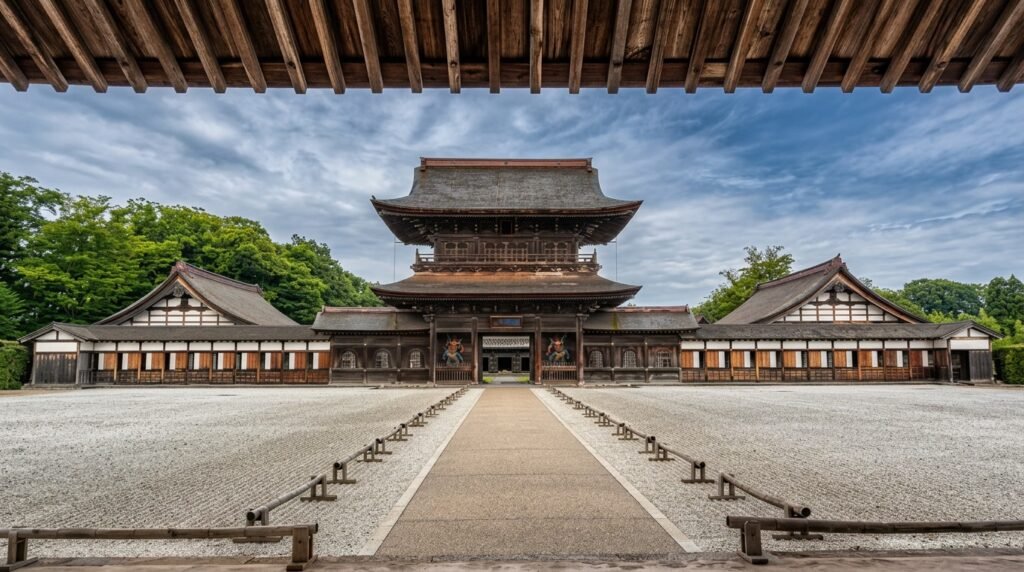
The temple and Toshinaga’s tomb are connected by the Hachōmichi, an 870-meter path stretching eastward from the main gate — a processional axis that still carries visitors between two worlds: the civic city and the sacred enclosure. Toyama Prefecture’s only site designated as a National Treasure, Zuiryū-ji received that honor in 1997, yet remains far less visited than its counterparts in Kyoto or Nara.
Symmetry, Lead, and the Weight of Devotion
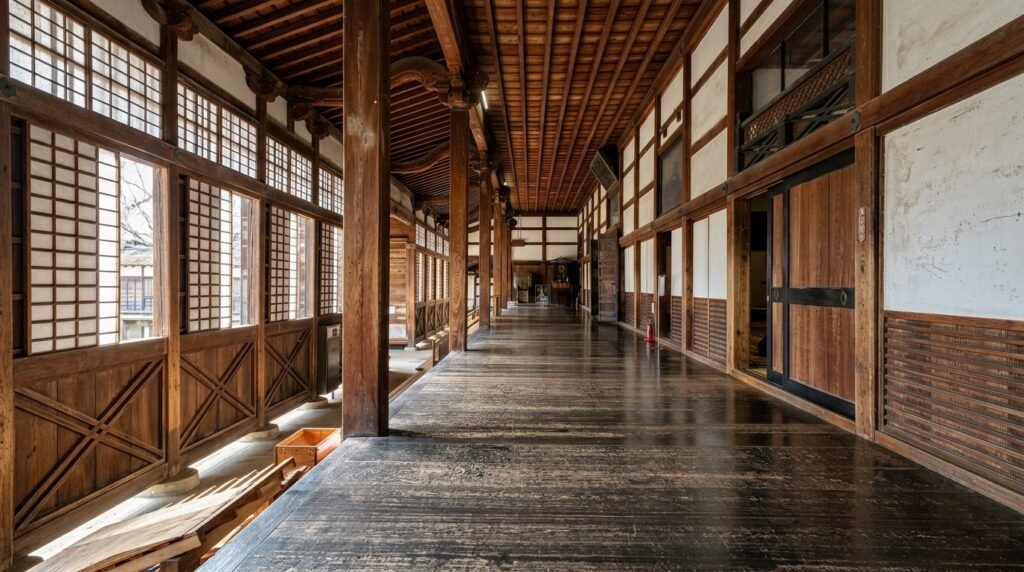
The temple has a symmetric layout with corridors connecting its buildings in a manner typical of Sōtō Zen monasteries, a sense of geometric harmony that pervades every corner of the complex. The imposing Sanmon gate greets visitors before opening onto the Butsuden, whose roof is one of the most remarkable in Japan. The lead roof tiles covering the Butsuden are said to weigh 47 tons in total, an almost incomprehensible expression of the Kaga domain’s wealth and devotion.
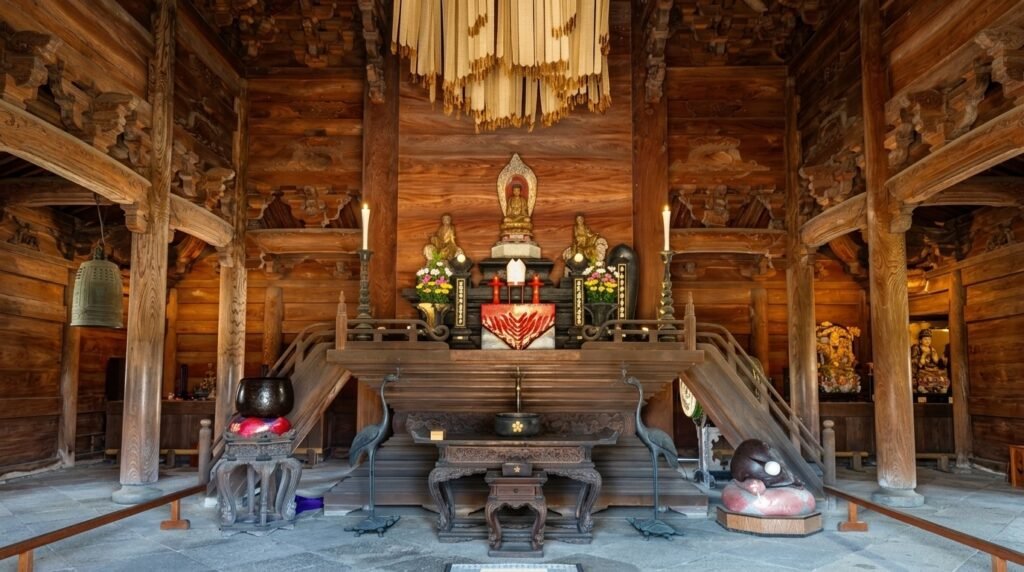
Inside the Hatto (Dharma Hall), the ceiling is decorated with paintings by Kano Yasunobu depicting hundreds of flowers, a masterwork of Edo-period painting that transforms the lecture hall into a blooming canopy. A rather unique deity worshipped here is Ususama Myō-ō, a fierce guardian of Buddhism rarely enshrined in Zen temples, a reminder that this complex was built not just for meditation, but for protection.
Takaoka's Best-Kept Secret, Ten Minutes on Foot
Zuiryū-ji is located in central Takaoka City, just a 15-minute walk from the main train station, and yet it sees only a fraction of the crowds that descend on Kyoto’s Zen temples. A sound and light show held each spring highlights the precinct’s serene beauty, when the stone courtyards and tiled rooftops glow softly after dark. Winter brings a different revelation: snow settling on the 47-ton lead roof, muffling the city entirely.
Every nook and corner of Zuiryū-ji is steeped in history, yet the atmosphere never feels preserved behind glass. Monks still move through the corridors, incense drifts from the Butsuden, and the symmetry of the layout, designed according to classical Zen principles, creates a stillness that large temple complexes rarely achieve. For anyone traveling the Hokuriku coast, this is the stop most worth making.