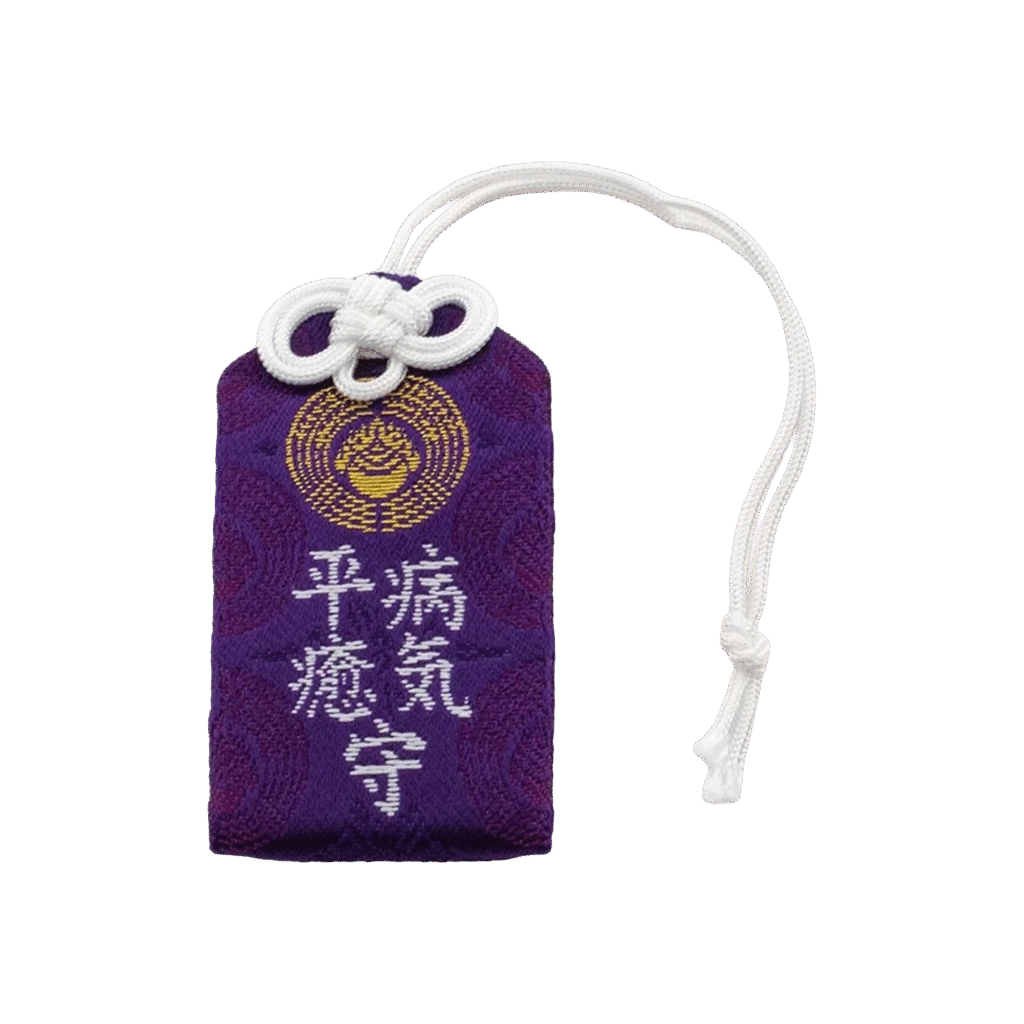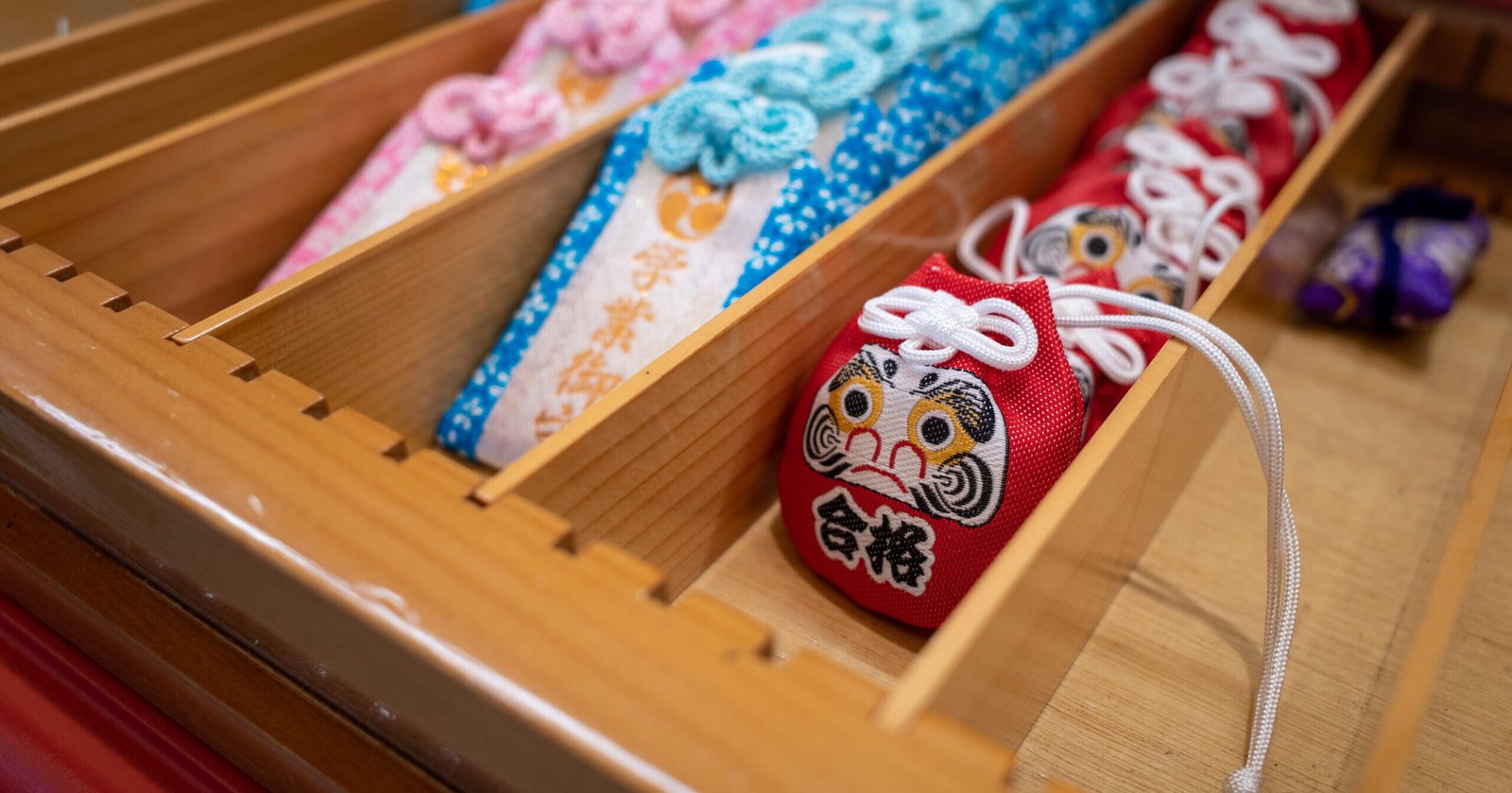
Japan, a land of ancient traditions and fascinating modernity, has always known how to preserve its rituals and beliefs. Among the most iconic are the omamori (お守り), which hold a special place in the hearts of the Japanese people. Often translated as “amulet” or “good luck charm,” these small, embroidered fabric pouches are much more than simple talismans. They embody a deep connection with the divine and a respectful approach to spirituality that permeates daily life in Japan.
An Ancient and Sacred Origin
To understand what an omamori is, it is essential to delve into its historical and spiritual roots. The term omamori is derived from the verb mamoru (守る), which means “to protect.” The honorific prefix “o” (お) gives the word a dimension of respect, emphasizing the sacred nature of the object. The origin of these amulets dates back to the earliest periods of Japanese culture, where divine protection was sought through ritual objects.
Historically, the practice of carrying protective talismans is common to many cultures, but in Japan, it crystallized around two major religions: Shintoism and Buddhism. Shinto shrines (神社, jinja) and Buddhist temples (寺, tera) are the places where omamori are traditionally found. Each of these places of worship offers amulets that are believed to hold the power of the deity or buddha it venerates.
In Shintoism, the omamori is seen as a vessel for the energy (the kami, 神) of the shrine’s guardian deity. It is infused with a divine blessing that protects the bearer. In Buddhism, the amulet often contains a sutra, a prayer, or the energy of a buddha, intended to bring peace of mind, health, or success. This religious duality is a fascinating feature of Japanese spirituality and is directly reflected in the variety of omamori.
The Composition and Creation Ritual
At first glance, an omamori is a small fabric pouch, often made of silk or brocade, measuring about 5 to 10 centimeters. It is closed with a cord and adorned with traditional patterns. However, what makes the omamori sacred is not its outer shell, but its contents. Most omamori contain a small sheet of paper, a strip of wood, or a metal plate on which a prayer, a sutra phrase, or the name of the shrine/temple is inscribed.
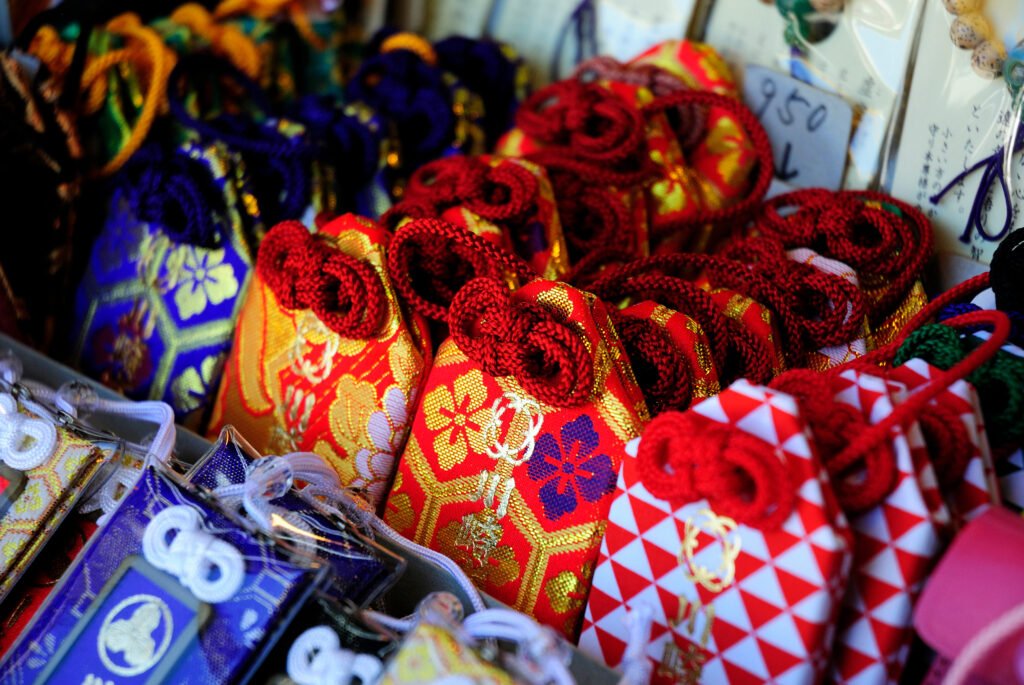
The process of creating an omamori is a ritual in itself. It begins with the purification of the materials and continues with the inscription of prayers by Shinto priests or Buddhist monks. The final blessing is the most crucial step, as it is believed to infuse the object with the spiritual power that makes it effective. It is not a mass-produced item but the result of a sacred intention.
The fabric pouch is sealed for an important reason: it is strictly forbidden to open it. It is said that opening the omamori would release the spiritual power it contains, rendering the amulet ineffective. This is not a superstition but a sign of respect for the ritual process and the divine power it holds. The cord of the pouch is also tied with a specific knot (often a musubi, 結び) that symbolizes the connection between the bearer and the deity.
The Different Types of Omamori and Their Functions
Far from being a simple, universal object of protection, omamori are incredibly specialized, designed to meet specific life needs. There are a multitude of categories, each with its own function and patterns.
| Omamori Type | Specific Function |
| Kōtsū Anzen (交通安全) | Traffic safety (accidents). Often kept in vehicles. |
| Gakugyō Jōju (学業成就) | Academic success and examinations. Essential for students. |
| En-Musubi (縁結び) | Love and relationship connections. For finding a soulmate or strengthening a couple. |
| Shōbai Hanjō (商売繁盛) | Business prosperity and commercial success. |
| Yakuyoke (厄除け) | General protection against evil and misfortune. |
| Kenko (健康) | Health and well-being. |
| Anzan (安産) | Safe pregnancy and childbirth. |
Each omamori has its own design, color, and pattern that correspond to its function. For example, an omamori for love might be pink or red with hearts, while an omamori for academic success might be white or blue with cherry blossom or book motifs.
How to Use and Care for an Omamori
Using an omamori is a simple but meaningful act. Tradition dictates that you should always carry it with you, in your bag, wallet, or hang it on a personal item like a key chain or backpack. Proximity to the bearer’s body is essential for the protective power to be effective.
A common question is how long an omamori remains effective. Popular belief holds that the power of an omamori lasts for about one year. After this period, the amulet has fulfilled its mission, and its power wanes. It is then customary to return it to the shrine or temple where it was purchased, so it can be burned during a ritual ceremony (the otakiage, お焚き上げ). This symbolic act allows the deity to be returned to the heavens and expresses gratitude for the protection received.
Throwing an omamori in the trash is considered disrespectful to the deity and the ritual. This is why most shrines and temples have special boxes for used amulets. If you cannot return to the exact place where you bought it, you can bring it to any other place of worship that accepts omamori donations.
In conclusion, an omamori is much more than a simple superstitious object. It is a tangible symbol of faith, respect, and connection with Japanese spirituality. It embodies the idea that the divine is present in our daily lives, offering protection and guidance to those who ask for it with a sincere heart. Carrying an omamori is to embrace a part of this rich culture and to remember that even the smallest objects can hold profound meaning.