Mōtsū-ji Temple: The Pure Land Garden of Hiraizumi in Iwate
Construction
850 (Heian period)
Divinité
Yakushi Nyōrai (Medicine Buddha)
Religion
Buddhism (Tendai)
Location
Hiraizumi, Iwate Prefecture, Tōhoku, Japan
A Paradise Built on Earth
In the quiet farming town of Hiraizumi, in southern Iwate Prefecture, a garden has kept the shape of paradise for more than eight centuries. Mōtsū-ji is a Tendai Buddhist temple founded in 850 by the monk Jikaku Daishi Ennin, and in 2011 it was inscribed, together with the other monuments of Hiraizumi, on UNESCO’s World Heritage List as “Hiraizumi – Temples, Gardens and Archaeological Sites Representing the Buddhist Pure Land.” Unlike Kyoto’s crowded temples, Mōtsū-ji is a place of wide skies, pine trees and still water, where visitors walk slowly around a great pond that was designed, stone by stone, to picture the Western Paradise of Amida Buddha.
Mōtsū-ji’s golden age came in the late Heian period, when Hiraizumi was the capital of the Northern Fujiwara, the warrior clan that ruled the far north of Japan almost independently of Kyoto. The second lord, Fujiwara no Motohira, and his successor Hidehira rebuilt the temple on a grand scale: at its height it counted some forty halls and living quarters for five hundred monks, and its Golden Hall, Enryū-ji, was praised in its day as “unmatched in our country.” The glory did not last. The Fujiwara fell to Minamoto no Yoritomo at the start of the Kamakura period, the halls were lost to war and fire — the last great blaze came in 1573 — and when the poet Matsuo Bashō passed through Hiraizumi in 1689, he wept over the vanished splendour in his travel diary Oku no Hosomichi. The present main hall dates from the 18th century, but the garden itself survived almost untouched.
The Garden That Survived the Flames
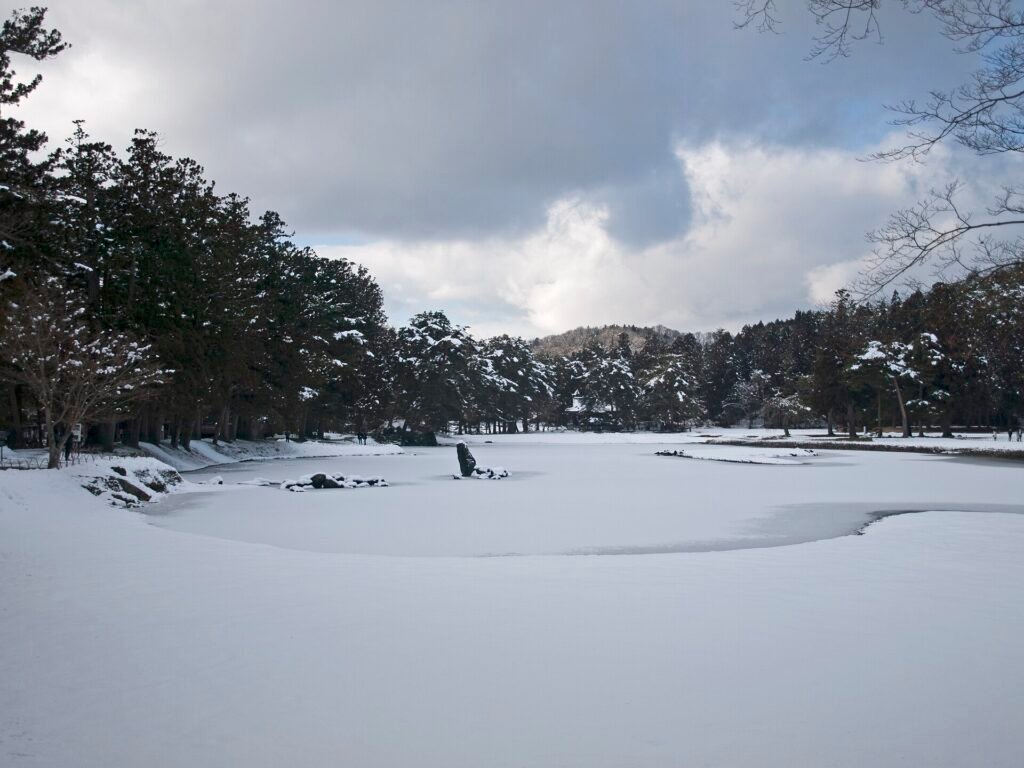
That garden is the reason to come. The Pure Land garden of Mōtsū-ji is one of the rare Japanese gardens to have kept its original Heian-period layout: it is both a Special Historic Site and a Special Place of Scenic Beauty, a double national distinction. At its centre lies Ōizumi-ga-ike, a large pond whose shoreline curves around islands, peninsulas and carefully placed rocks — the stones are said to evoke the rugged coast of Iwate itself. Walking the path around the water, past the stone foundations of the lost halls of Enryū-ji and Kashō-ji, is like walking through a painting of paradise that monks once used as a support for meditation: the Pure Land was not an abstract heaven, but a landscape you could enter on foot.
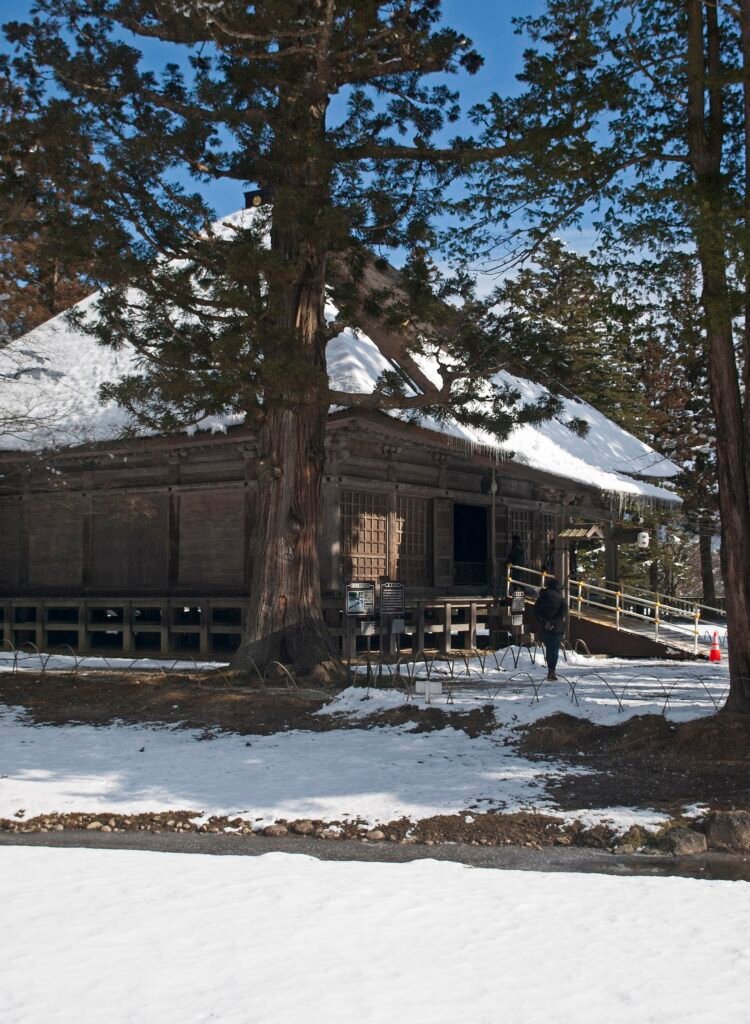
Beside the pond stands the Jōgyō-dō, the hall of constant walking meditation, where the temple’s most sacred ritual still takes place each winter. The main hall enshrines the temple’s principal image, a standing statue of Yakushi Nyōrai, the Medicine Buddha, the healer who relieves suffering and illness. That presence gives Mōtsū-ji its particular warmth: this is not only a beautiful ruin or a museum of stones, but a working temple where incense still burns and prayers are still offered, much as they were when Hiraizumi dreamed of building paradise on earth.
A Living Calendar of Festivals
Mōtsū-ji changes with the seasons, and its festivals keep the old court culture alive. In late June the Iris Festival (June 20 to July 10) fills a dedicated garden with some 30,000 irises of around 300 varieties, accompanied by koto concerts, tea ceremonies and performances of Ennen no Mai, the temple’s ancient ritual dance. On the fourth Sunday of May, the Gokusui no En — the Winding Stream Banquet — revives a Heian poetry game: guests in period costume compose verses as cups of sake drift down a stream, just as aristocrats did a thousand years ago. In autumn, the maples between the old cedars turn a deep red, and in winter, on January 20, the Hatsuka-yasai festival closes with a torchlit procession and the Ennen no Mai dances, performed here since the 12th century and designated an Important Intangible Folk Cultural Property.
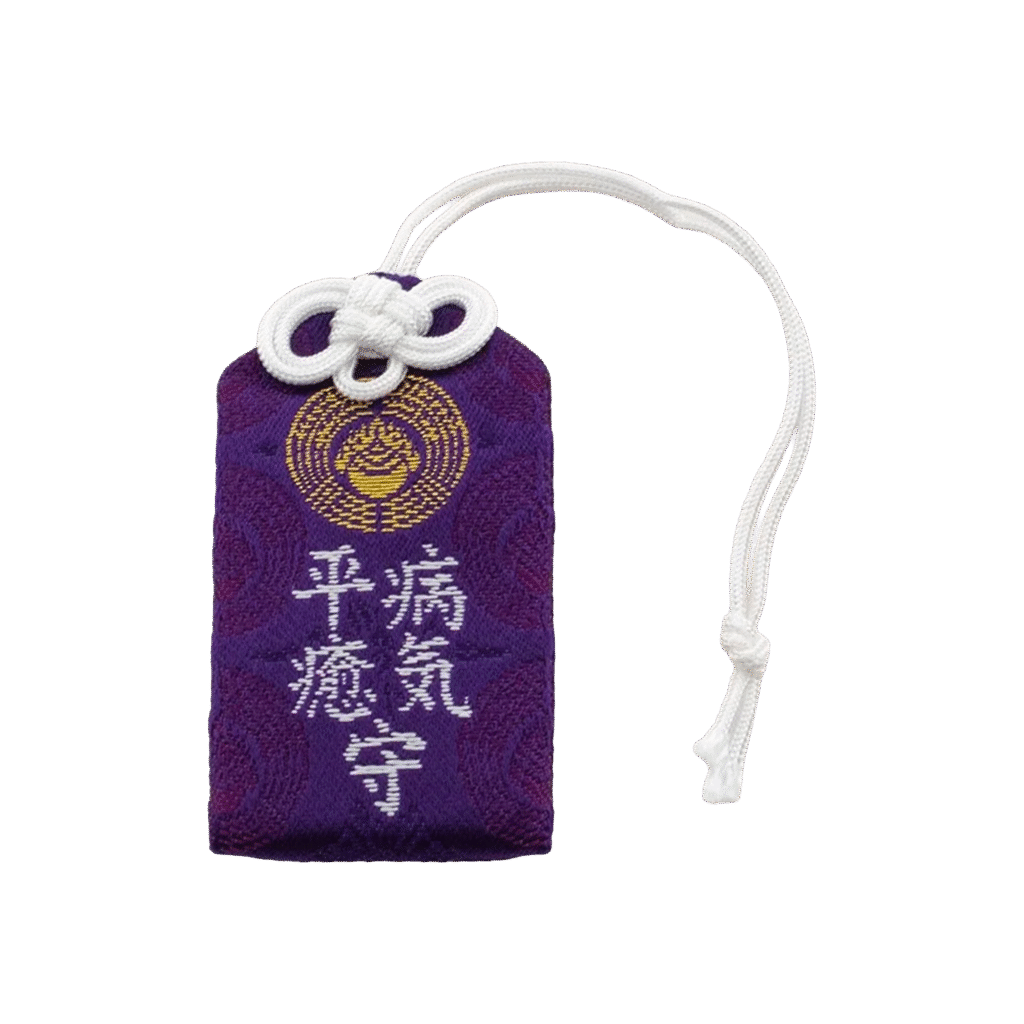
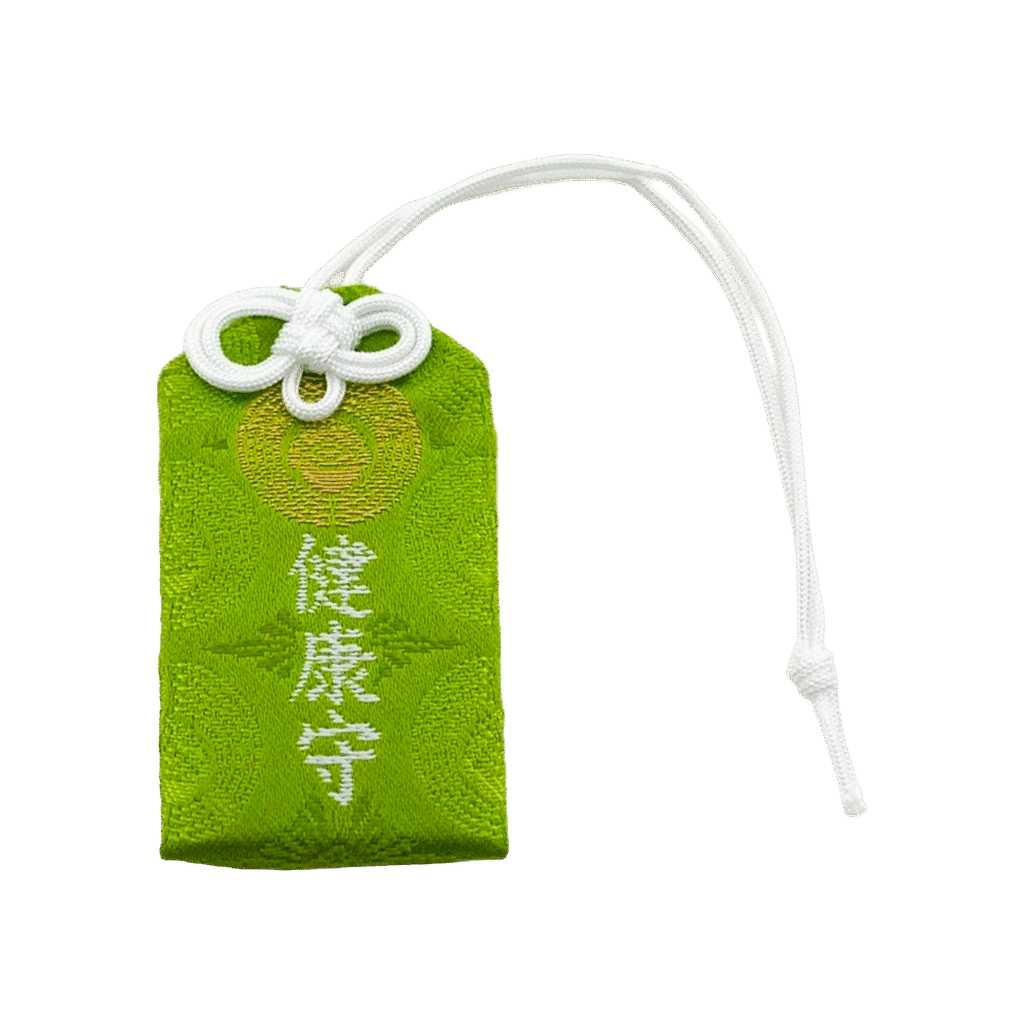
For travellers, Mōtsū-ji is also refreshingly easy to reach: ten minutes on foot from JR Hiraizumi Station, a short train ride from Ichinoseki on the Tōhoku line, and a world away from the crowds of Kyoto or Nara. Come in spring for the cherry blossoms, in summer for the irises, or in autumn for the maples — and before you leave, pause at the hall of Yakushi Nyōrai. An omamori for health from a temple dedicated to the Medicine Buddha carries a simple, ancient wish: that body and spirit stay whole, here and on the road home.