Omamori authentique béni par un prêtre, livré dans le monde entier
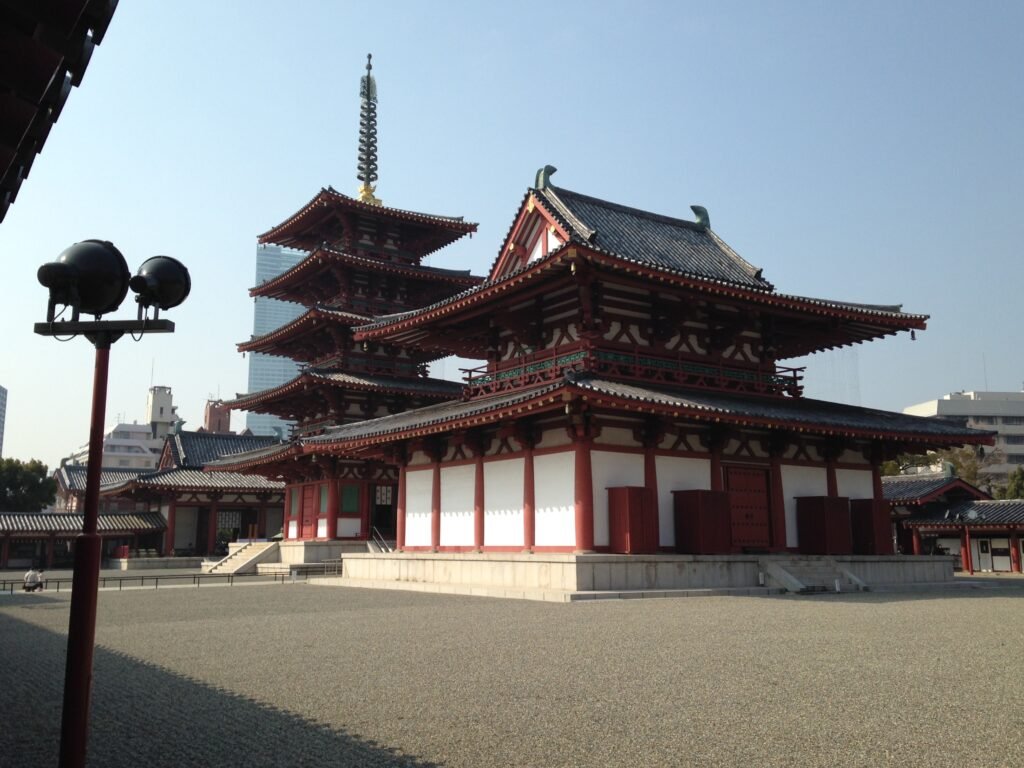
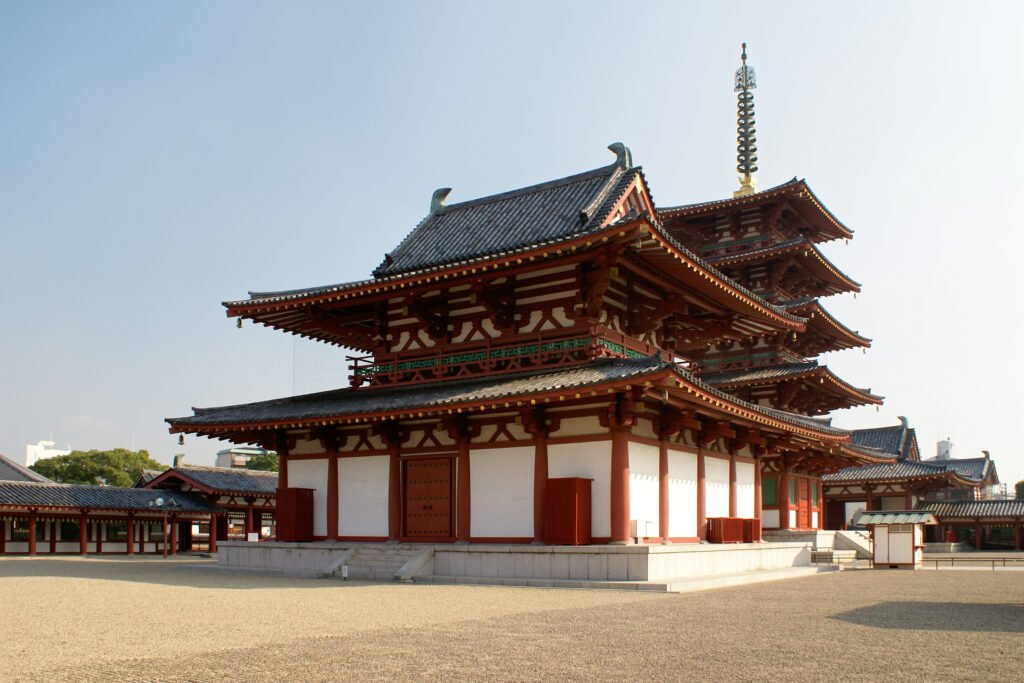
Five-story pagoda and Kondo golden hall of Shitennoji Temple in Osaka

TEMPLES ET SANCTUAIRES

Shitennō-ji Temple: Japan’s First State Temple, Built on a Prince’s Vow in Osaka

Construction

Founded in 593 by Prince Shōtoku; present buildings from the 1963 reconstruction, following the original 6th-century plan

Divinité

The Four Heavenly Kings (Shitennō), with Prince Shōtoku honoured as Kannon in the Kondō

Religion

Buddhism — Wa-shū (head temple since independence after World War II); Japan's first state-sponsored temple

Location

1-11-18 Shitennōji, Tennōji-ku, Osaka, Osaka Prefecture, Kansai, Japan
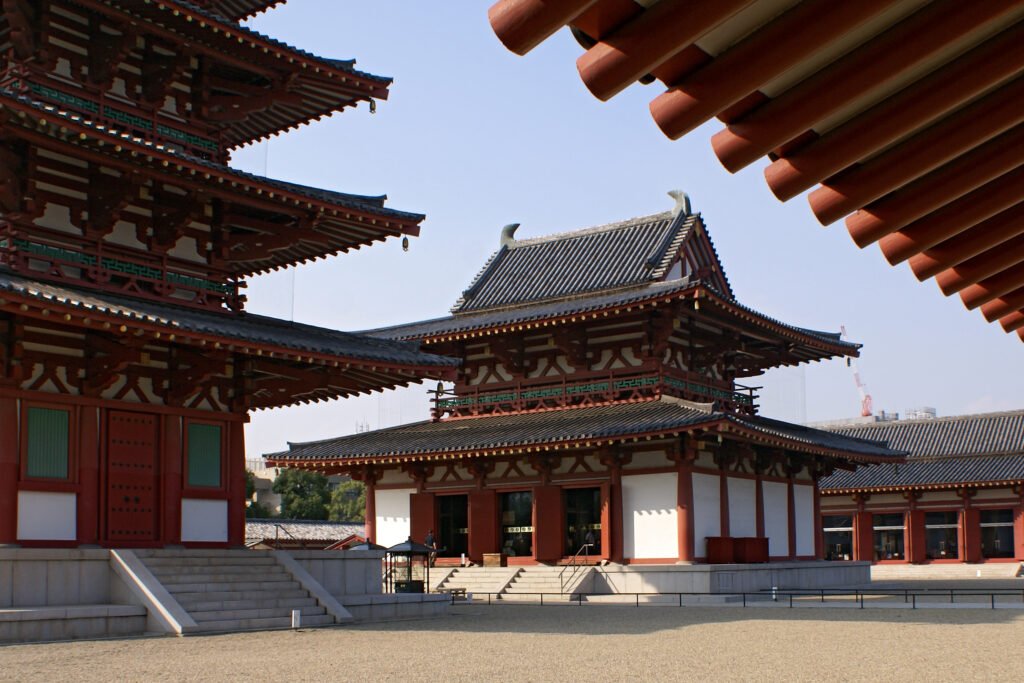
Five-story pagoda and Kondo of Shitennoji Temple viewed from the courtyard in Osaka

A Prince's Vow, Four Guardian Kings — and 1,400 Years of Osaka Faith

In the middle of modern Osaka, between shopping streets and the Tennoji skyline, stands the temple that started it all. Shitennō-ji was founded in 593 by Prince Shōtoku, the statesman who brought Buddhism to the heart of Japanese government, and it is regarded as Japan’s first state-sponsored Buddhist temple. Fourteen centuries of fires, typhoons, wars and rebuildings have not moved it from its original plan: a straight stone path runs from the great south gate through a five-story pagoda to the golden hall, exactly as it did in the sixth century. It is at once a monument, a working temple and, twice a month, the liveliest market in Osaka.

A Prince's Vow on the Battlefield

Shitennō-ji was born out of war. In the sixth century, Buddhism was still new to Japan and fiercely contested: the pro-Buddhist Soga clan faced the anti-Buddhist Mononobe clan, and Prince Shōtoku stood with the Soga. Before a decisive battle, tradition says, he carved images of the Shitennō, the Four Heavenly Kings who guard the Buddhist world — Jikoku-ten in the east, Zōchō-ten in the south, Kōmoku-ten in the west and Tamon-ten, also called Bishamon-ten, in the north — and vowed that if he won, he would build a temple to honour them and save all people. He won, and in 593, the first year of Empress Suiko’s reign, the temple rose in Naniwa, the port city that would become Osaka. Shōtoku invited three master carpenters from the Korean kingdom of Baekje to lead the work, and one member of that original building team later founded Kongō Gumi, a temple-building firm that survived for over 1,400 years as the world’s oldest company until 2004. The prince’s ambition went beyond prayer: around the seven-building garan he set up the Shika-in, the Four Institutions — a school of religion and education, a welfare house, a hospital and a pharmacy — so the temple would care for the people’s bodies and minds alike. Three of the four are known to have still existed in the Kamakura period. After the Second World War the temple left the Tendai school and became the head temple of its own Wa sect, but its founding idea has never changed: a temple built by the state, for everyone.
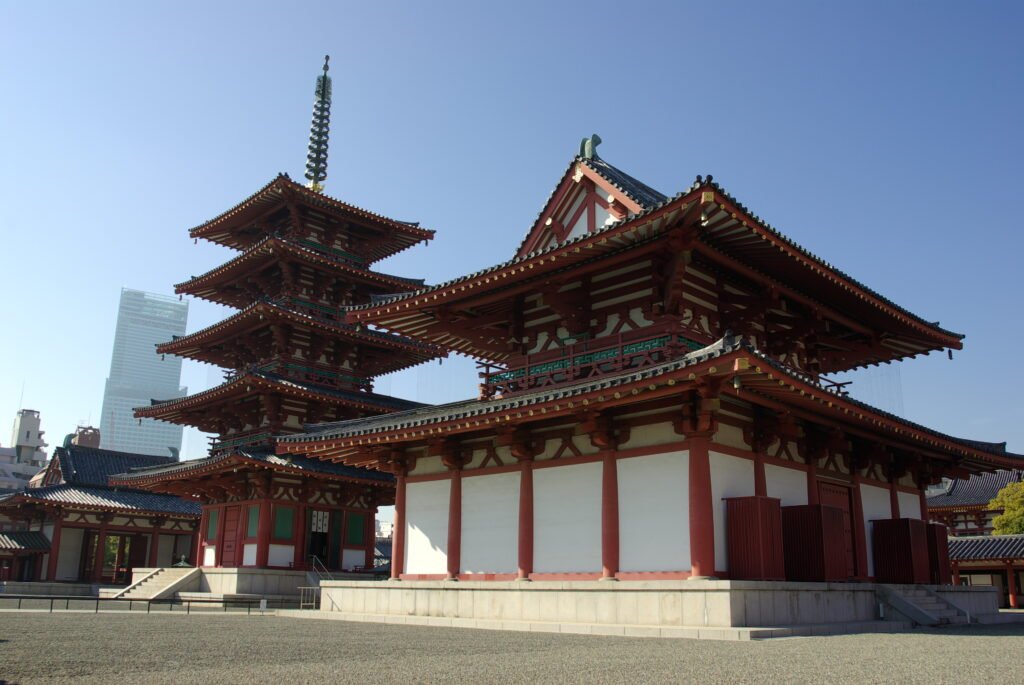
Kondo golden hall and five-story pagoda of Shitennoji Temple in Osaka
Five-story pagoda of Shitennoji Temple with Abeno Harukas in the background, Osaka

A Straight Line to Paradise — and Osaka's Biggest Flea Market

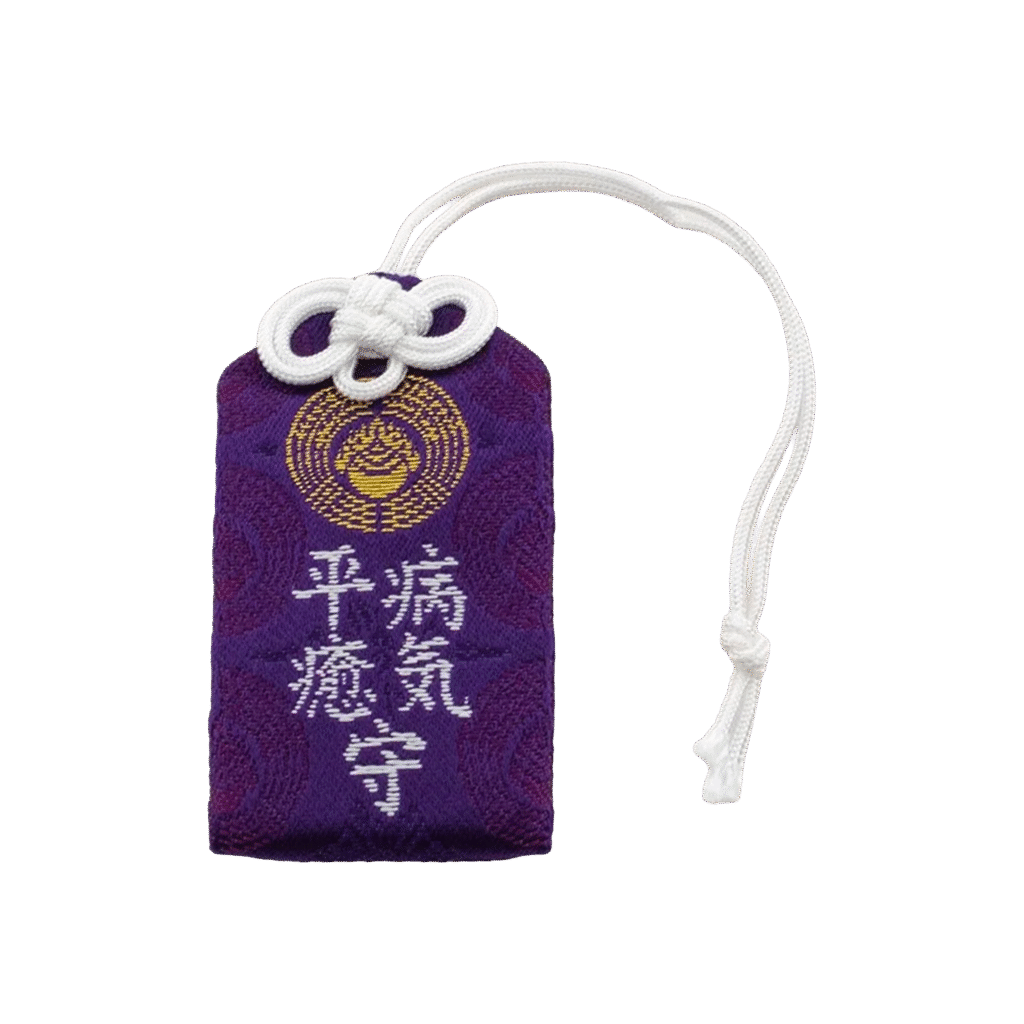
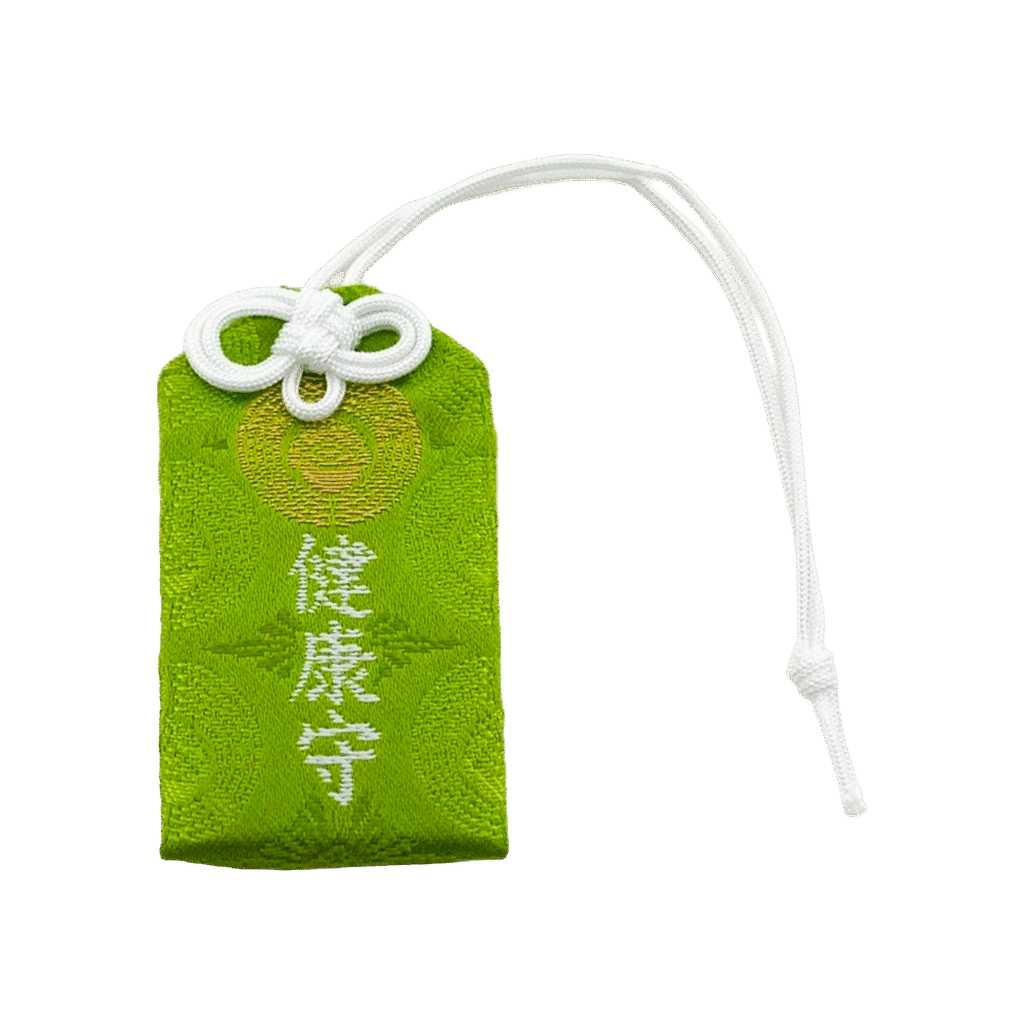
The layout itself is the treasure. Architectural historians call it the « Shitennō-ji style »: from south to north, in a single straight line enclosed by covered corridors, stand the inner gate (Chūmon, also the Niōmon), the five-story pagoda, the Kondō golden hall and the Kōdō lecture hall — the oldest temple arrangement in Japan. The Kondō holds the temple’s principal image, Prince Shōtoku himself honoured as Kannon, bodhisattva of compassion, flanked by statues of the Four Heavenly Kings to whom the temple is dedicated. In the Kōdō, where Shōtoku is said to have lectured on the Lotus Sutra, stand an Eleven-Headed Kannon and a seated Amida Buddha six metres high. Walk west and you pass the Great West Gate, the Gokuraku-mon or « Gate of Paradise », and beyond it a stone torii imagined as the eastern gate of Sukhavati, the Pure Land of the West — sunset here is said to be especially beautiful. In the Kameido hall, look for the seventh-century turtle-shaped stonework, still used in rites honouring ancestors. The present buildings are mostly from the last complete reconstruction, finished in 1963 after the 1934 Muroto typhoon levelled the pagoda, but they faithfully follow the sixth-century plan. Come on the 21st or 22nd of any month and the mood changes completely: the Daishi-e memorial of Kōbō Daishi (21st) and the Taishi-e memorial of Prince Shōtoku himself (22nd) turn the grounds into Osaka’s biggest flea market, hundreds of stalls selling antiques, kimono cloth, ceramics and street food, with the central precinct open free of charge. The temple is five minutes from Shitennoji-mae Yuhigaoka Station on the Tanimachi Line, or fifteen minutes from Tennōji Station. Before you leave, stop at the temple office: an omamori from Shitennō-ji — for protection under the Four Heavenly Kings, or for health, in the spirit of the hospital and pharmacy the prince founded beside the halls — carries home a little of Japan’s oldest act of public faith.

Vous pourriez aimer:

Sign up and get

10% Off

On all Omamori

Carry protection, luck, and peace wherever you go.