If you’re planning a trip to Japan, visiting a traditional Shinto shrine (Jinja) or Buddhist temple (Otera) is a must-do cultural experience. To ensure your visit is respectful and meaningful, understanding the proper etiquette is essential. This definitive guide breaks down the most important rules, from the shared customs to the distinct differences between Japanese shrine etiquette and Buddhist temple rules.
General Etiquette (Shrines & Temples)
These are the fundamental rules of respect to follow at any sacred site in Japan.
| ✅ DO | ❌ DO NOT |
| Walk on the Sides: Keep to the left or right of the main path (Sando). The center is traditionally reserved for the gods (Kami) or the Buddha. | Walk Down the Center: Never walk directly down the middle of the main approach. |
| Purify Yourself at the Temizuya: Always cleanse your hands and mouth at the water basin near the entrance. (See full steps below). | Skip the Purification: This ritual is a necessary step before entering the sacred space. |
| Be Respectful and Quiet: Remember these are places of worship, not just tourist attractions. Speak softly and be mindful of praying visitors. | Be Loud or Disruptive: Turn your phone to silent. Avoid shouting or laughing loudly. |
| Dress Appropriately: While no strict dress code exists, modest attire shows respect. Remove your hat before entering the worship hall. | Enter Buildings with Shoes: Look for signs to remove your shoes before stepping onto wooden floors or tatami mats (wear clean socks!). |
| Check Photography Rules: Taking photos of the grounds is usually fine, but photography is often strictly forbidden inside the main halls. | Touch Sacred Objects: Do not touch statues, altars, or ritual tools. |
Shinto Shrine Etiquette (The 2-Bow, 2-Clap, 1-Bow Ritual)
Shinto is Japan’s indigenous religion, focused on the worship of nature spirits (Kami). You can identify a Shinto shrine by its signature red or unpainted wood Torii Gate.

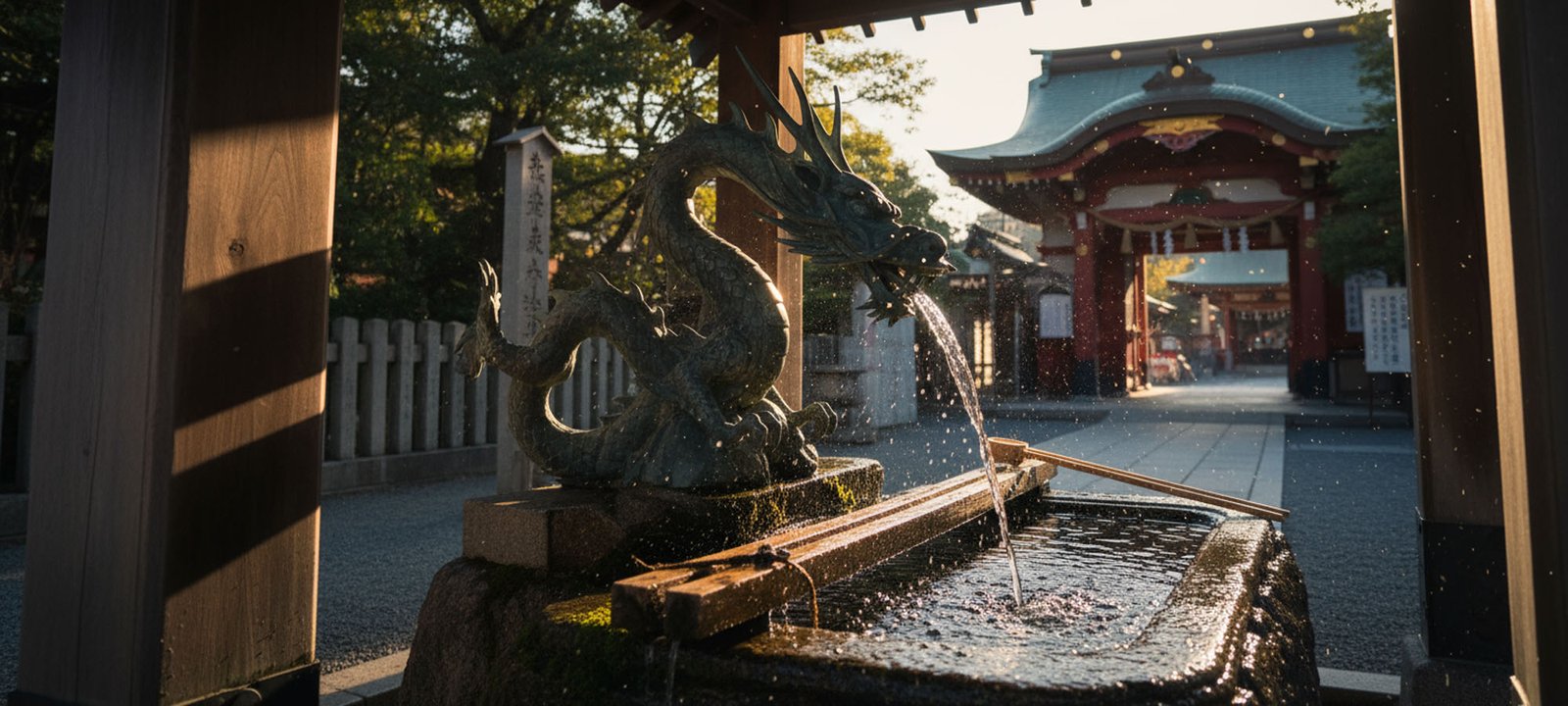
1. The Purification Ritual (Temizuya)
The goal is to purify your body and mind before greeting the Kami.
- Scoop Water: Use the ladle in your right hand to scoop water.
- Wash Left Hand: Pour water over your left hand.
- Wash Right Hand: Switch the ladle to your left hand and pour water over your right hand.
- Rinse Mouth: Transfer a small amount of water to your cupped left hand and lightly rinse your mouth. Spit the water beside the basin, not back into it.
- Clean Ladle: Hold the ladle vertically to let the remaining water flow down the handle, cleaning it for the next visitor. Return it neatly.
2. The Prayer Ritual (Nirei-Nihakushu-Ichirei)
This is the famous “Two Bows, Two Claps, One Bow” sequence performed at the main hall (Haiden):
- Offer Coin: Toss a coin (Saisen) into the offering box. (Many locals choose a 5-yen coin because go-en sounds like “good connection” or “good fortune”).
- Ring Bell: If a bell rope is present, gently ring it to get the Kami‘s attention.
- Bow Twice: Bow deeply (about a 90-degree angle) two times.
- Clap Twice: Clap your hands together two times.
- Pray: Hold your hands together and make your silent prayer or wish.
- Bow Once: Bow deeply one final time to finish.
Buddhist Temple Etiquette (The Silence of the Buddha)
Buddhist temples (Otera) are often distinguished by intricate, house-like Sanmon Gates, statues of the Buddha, and large incense burners.

1. Incense Offering (Osenkō)
Many temples feature a large incense burner (Jōkōro) in front of the main hall.
- Light Incense: Purchase a bundle, light it, and extinguish the flame by waving your hand (never blow it out with your mouth).
- Place Incense: Carefully place the stick into the sand or ash.
- Fan Smoke: It is common for visitors to waft the smoke towards themselves, believing it can help heal or purify that part of the body.
2. The Prayer Ritual (Hands Together, No Clapping)
The Buddhist prayer ritual is much simpler than the Shinto one.
- Offer Coin: Toss a coin into the offering box.
- Ring Gong/Bell: If a gong or bell is present, you may gently use it to announce your presence.
- Pray Silently: Bring your hands together in front of your chest and offer a silent prayer or reflection.
- DO NOT CLAP. Clapping is not part of the Buddhist prayer tradition in Japan.
- Bow: Bow once before leaving the main hall.
By following this guide, you will show the appropriate respect for Japanese customs and traditions, ensuring a positive and enriching experience during your visit to these beautiful and sacred sites.
Would you like me to suggest some famous Japanese temples or shrines to visit?