Daisho-in Temple: A Timeless Spiritual Sanctuary on Miyajima Island
Date
806 (Daidō era, first year)
Divinity
Sanki Daigongen, the guardian deity of Mount Misen
Religion
Esoteric Shingon Buddhism
Location
Hatsukaichi, Hiroshima
Daisho-in: The Spiritual Heart of Miyajima
Located at the base of Mount Misen, Daisho-in Temple is a historic Shingon Buddhist site founded in the 9th century. Connected to the renowned monk Kūkai and distinguished by centuries of Imperial patronage, it serves as the head temple of the Omuro branch. Today, its serene grounds, lush nature, and vast collection of statues offer both pilgrims and travelers a profound connection to Japan’s ancient spiritual heritage.
Established in 806 CE by the celebrated monk Kūkai, Daisho-in anchored Miyajima as a center of Shingon Buddhism. Its prestige is defined by deep Imperial ties: Emperor Toba commissioned a prayer hall here, and Emperor Meiji used the temple as his residence in 1885.
Historically, Daisho-in served as the administrator for the famous Itsukushima Shrine until the 1868 separation of Shinto and Buddhism (Shinbutsu bunri). Today, it remains a vital spiritual hub, serving as a key stop on the Chūgoku region’s 33 Kannon pilgrimage route.
Sacred Artistry & Nature
Nestled into the forested slope of Mount Misen, Daisho-in Temple harmoniously blends traditional Japanese architecture with nature, framed by a canopy of maples that transform with the seasons. The temple complex serves as a seamless union of functionality and sacred aesthetics, transporting visitors back to an era of flourishing religious artistry.
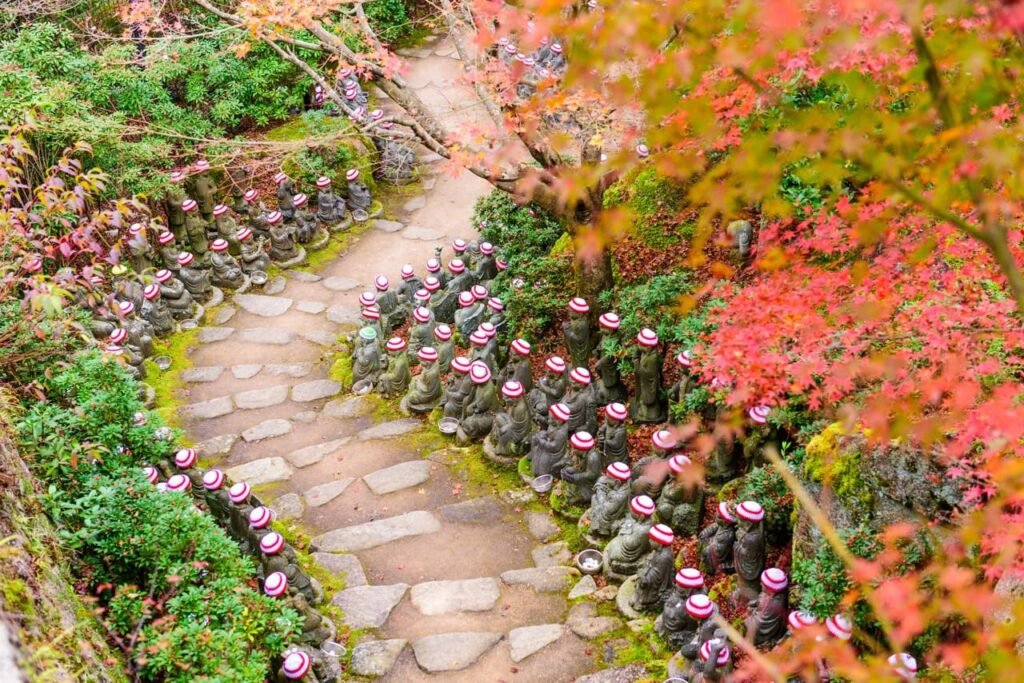
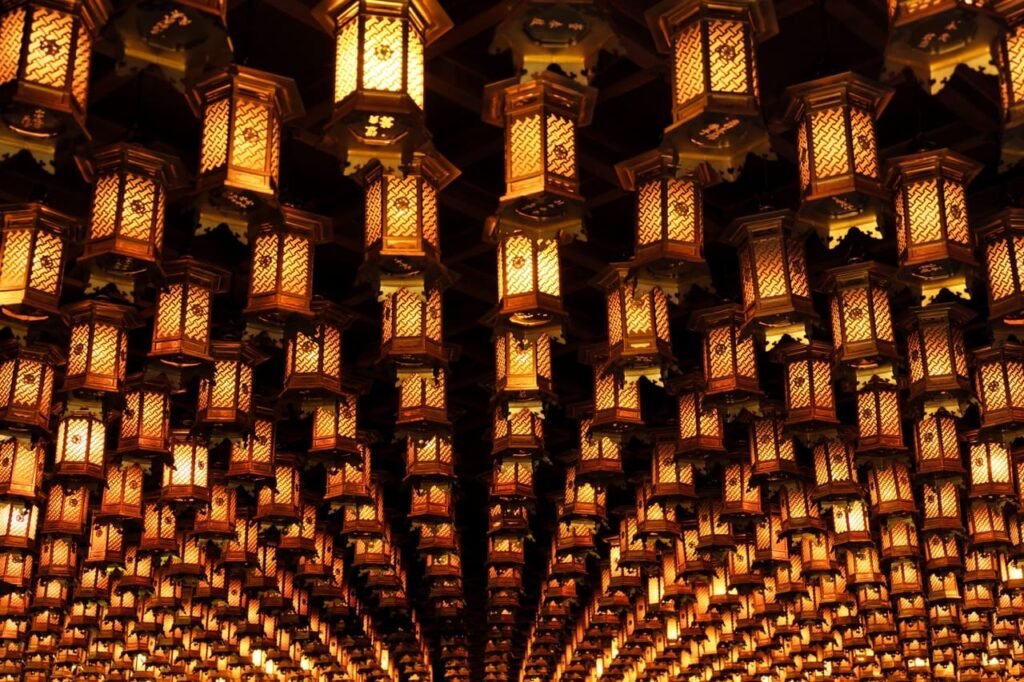
The approach is a spiritual journey in itself: visitors ascend stone steps lined with glowing lanterns and statues of the Seven Lucky Gods. Inside, the grounds are populated by hundreds of deities, including the Eleven-Headed Kannon (Goddess of Mercy) and the fierce protector Fudō-myōō, housed within exquisitely crafted wooden halls adorned with intricate carvings.
Far more than a historic relic, Daisho-in remains a vibrant center of Shingon Buddhist practice and the head temple of the Omuro sect. It serves as a spiritual anchor for Mount Misen, worshipping Sanki Daigongen (the mountain’s guardian spirit) alongside the compassionate Kannon.
Culturally, the temple is a crossroads of history, famously hosting tea ceremonies for the legendary warlord Toyotomi Hideyoshi, blending martial and religious traditions. Located near the UNESCO-listed Itsukushima Shrine, Daisho-in continues to act as a beacon of heritage, offering pilgrims and travelers a deep connection to ancient Japanese spirituality.
A Living Sanctuary of Culture
Located just a 30-minute walk from Miyajima Pier, Daisho-in offers a peaceful sanctuary away from the island’s bustling tourist hubs. Visitors are invited to wander through extensive grounds, ascending meditative stone steps lined with lanterns and statues that frame stunning views of the surrounding forest.
The experience is immersive and interactive; guests can observe traditional Omuro school rituals, engage with practitioners, or simply find solace in the quiet atmosphere. The scenery transforms vividly with the seasons, offering a kaleidoscope of colors in autumn and symbols of renewal during the spring bloom
Daisho-in Temple stands as a powerful monument to Japan’s spiritual depth and cultural artistry. Founded by Kūkai in 806 CE, it represents over a millennium of imperial patronage and vibrant religious practice. Whether approached as a sacred pilgrimage site, a historical archive, or a nature retreat at the base of Mount Misen, the temple invites visitors to journey through centuries of reverence.
For anyone exploring the intersection of history, culture, and faith, Daisho-in offers an unparalleled window into the soul of Shingon Buddhism and the enduring legacy of Miyajima Island