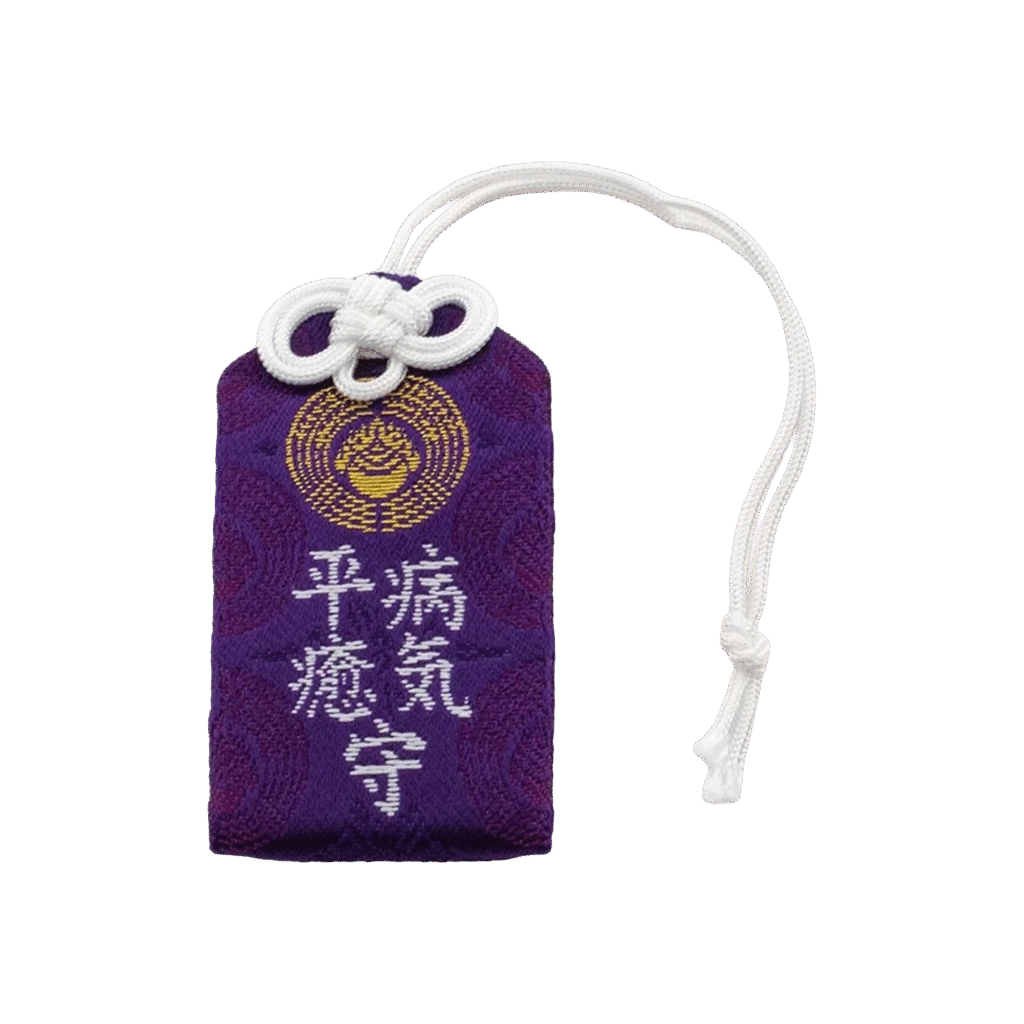
Authentic omamori blessed by a priest, delivered worldwide

Temples & Shrines

Eihei-ji Temple: The Enduring Heart of Sōtō Zen in Chūbu

Date

1244

Divinity

-

Religion

Buddhism

Location

Eiheiji, Fukui

The Founding Master and the Birth of a Legacy

Eihei-ji Temple, whose name translates to “Temple of Eternal Peace,” was founded in 1244 by the remarkable Buddhist priest, Dōgen Kigen (1200–1253). Dōgen is one of the most pivotal figures in Japanese religious history, credited with bringing the Sōtō school of Zen Buddhism from China to Japan. After years of dissatisfaction with the existing Buddhist schools in Kyoto, which he felt had become too ritualistic and focused on worldly gain, Dōgen journeyed to China to seek the authentic teaching. Upon his return, he initially established a small temple near Kyoto, but sought a location more conducive to pure, unadulterated monastic practice, far from the capital’s political and social distractions.
This search for solitude led him to the remote, deep forests of Echizen Province (now Fukui Prefecture) in the heart of the Chūbu region. Dōgen chose this mountainous location to create a dedicated Zen training monastery where the pursuit of enlightenment through sitting meditation (zazen) could be the sole focus. His move signaled a deliberate rejection of the then-prevalent trend of establishing temples close to power centers, laying the groundwork for Sōtō Zen’s reputation for humility, simplicity, and rigorous practice. Dōgen’s core teaching, emphasizing shikantaza (just sitting), became the bedrock of Eihei-ji and the Sōtō school’s enduring philosophy.

The Practice of Shikantaza and Monastic Life

At its core, Sōtō Zen, as practiced at Eihei-ji, centers on the concept of shikantaza. This term translates to “just sitting” or “nothing but sitting,” and it represents the profound realization that practice and enlightenment are one and the same. Unlike some Rinzai Zen practices that utilize paradoxical riddles (kōan), Sōtō Zen views zazen (seated meditation) itself as the ultimate expression of the Buddha-nature, requiring no supplementary object or goal. The posture and mindful presence during the sitting are the enlightenment.
The daily life of a monk (unsui) at Eihei-ji is characterized by an intense and unyielding schedule, often starting before dawn. The monastic environment is structured to ensure that every single action is a form of Zen practice. Eating, walking, cleaning, and sleeping are all performed mindfully and according to strict, ritualized patterns. This comprehensive approach, known as samu (physical work), aims to eliminate the distinction between meditation and daily activity, manifesting the Zen teaching in every moment. Eihei-ji remains one of the most rigorous and respected training centers in Japan, drawing practitioners from around the world dedicated to this austere and disciplined spiritual path.

Architectural Grandeur in the Forest

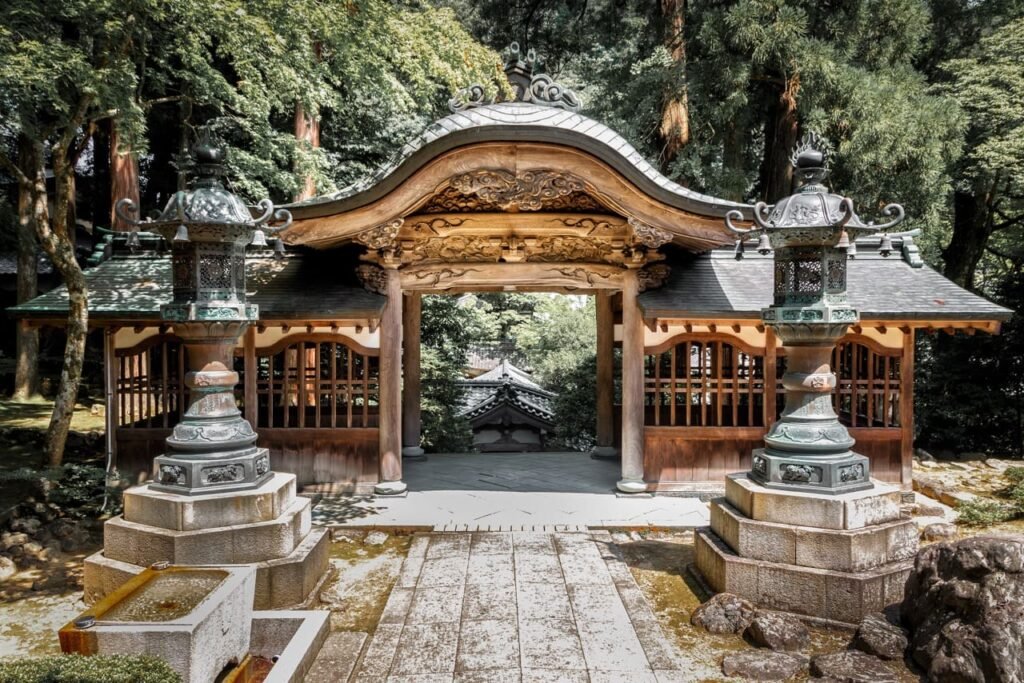
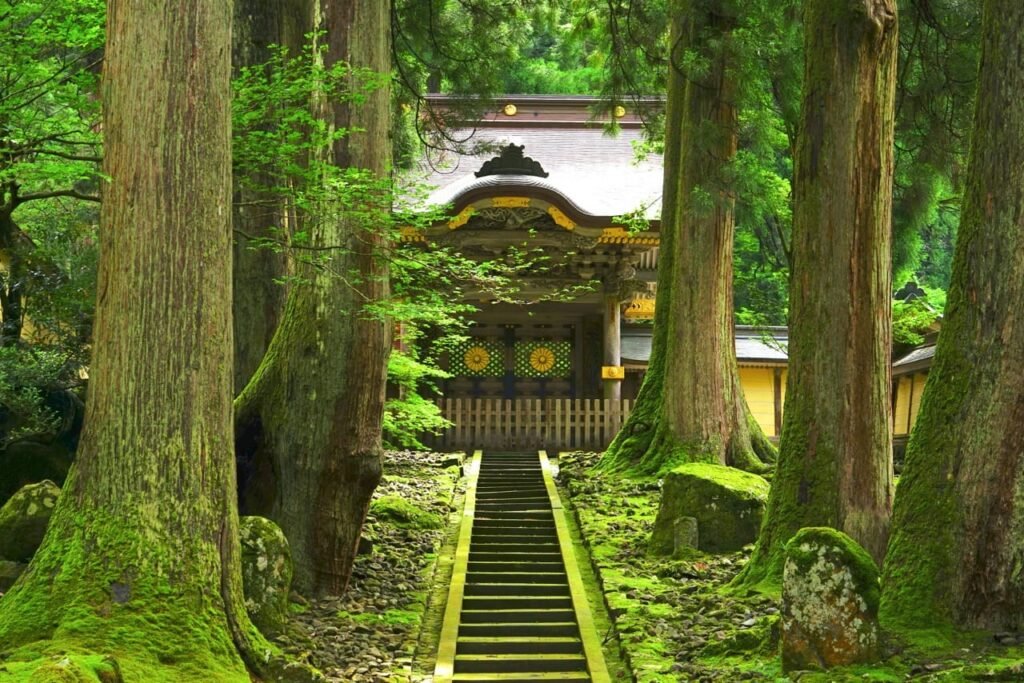
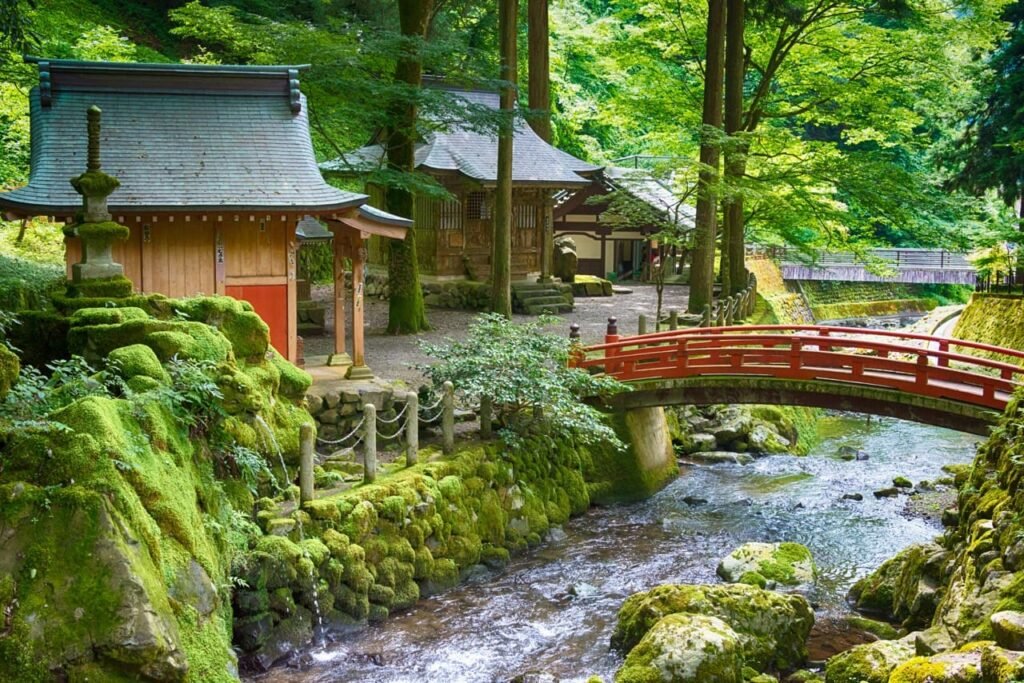
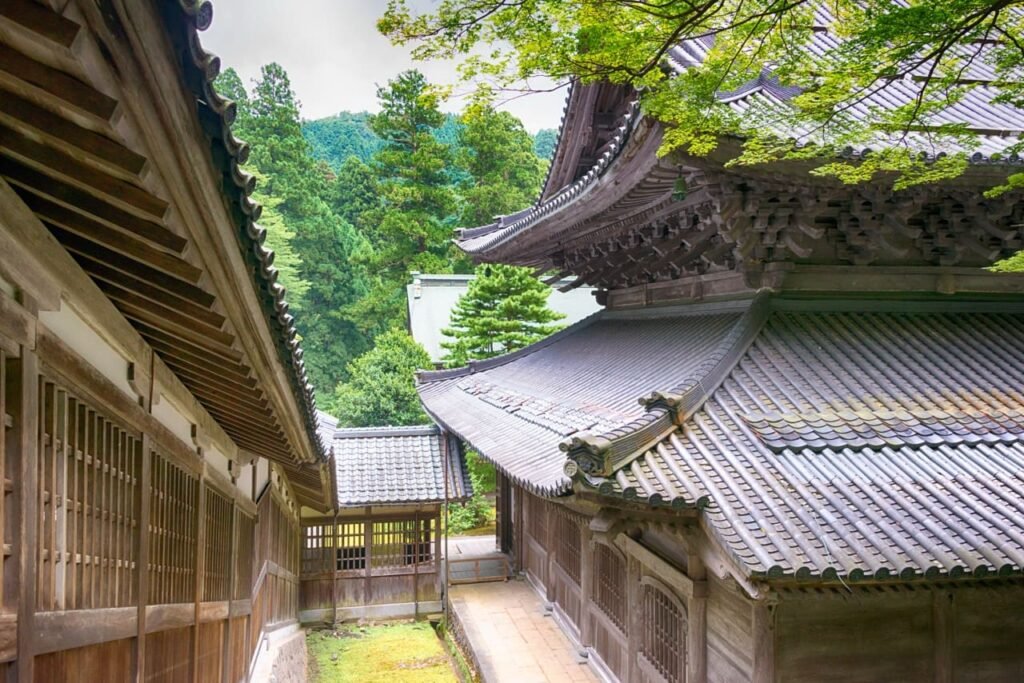
The temple complex of Eihei-ji is not a single building, but a sprawling network of halls, kitchens, and dormitories, all connected by vast, roofed wooden corridors (rōka) that stretch over long, forested distances. This unique architectural layout, with its numerous buildings built into the steep mountainside, reflects the temple’s continuous growth and its adaptation to the challenging terrain of the Chūbu mountains. The dominant architectural style is traditional Zen (Zenshū-yō), characterized by its clean lines, heavy tiled roofs, and reliance on sturdy timber, allowing the structures to blend seamlessly with the surrounding ancient cedar forests (sugi).
The most important structures in the complex adhere to the traditional Zen monastic layout, centered around the “Seven Halls” (Shichidōgaran). Key among these are the Hattō (Dharma Hall), the largest structure where the chief priest gives sermons; the Butsuden (Buddha Hall), where the main Buddha statues are enshrined; and the Sōtō (Monks’ Hall), which serves as the main training room where monks sleep, eat, and perform zazen. The atmosphere within the complex is one of hushed reverence, where the creak of wooden floors and the quiet chanting of the monks are the only disturbances to the profound stillness of the mountain environment.

You may Like:

Sign up and get

10% Off

On all Omamori

Carry protection, luck, and peace wherever you go.